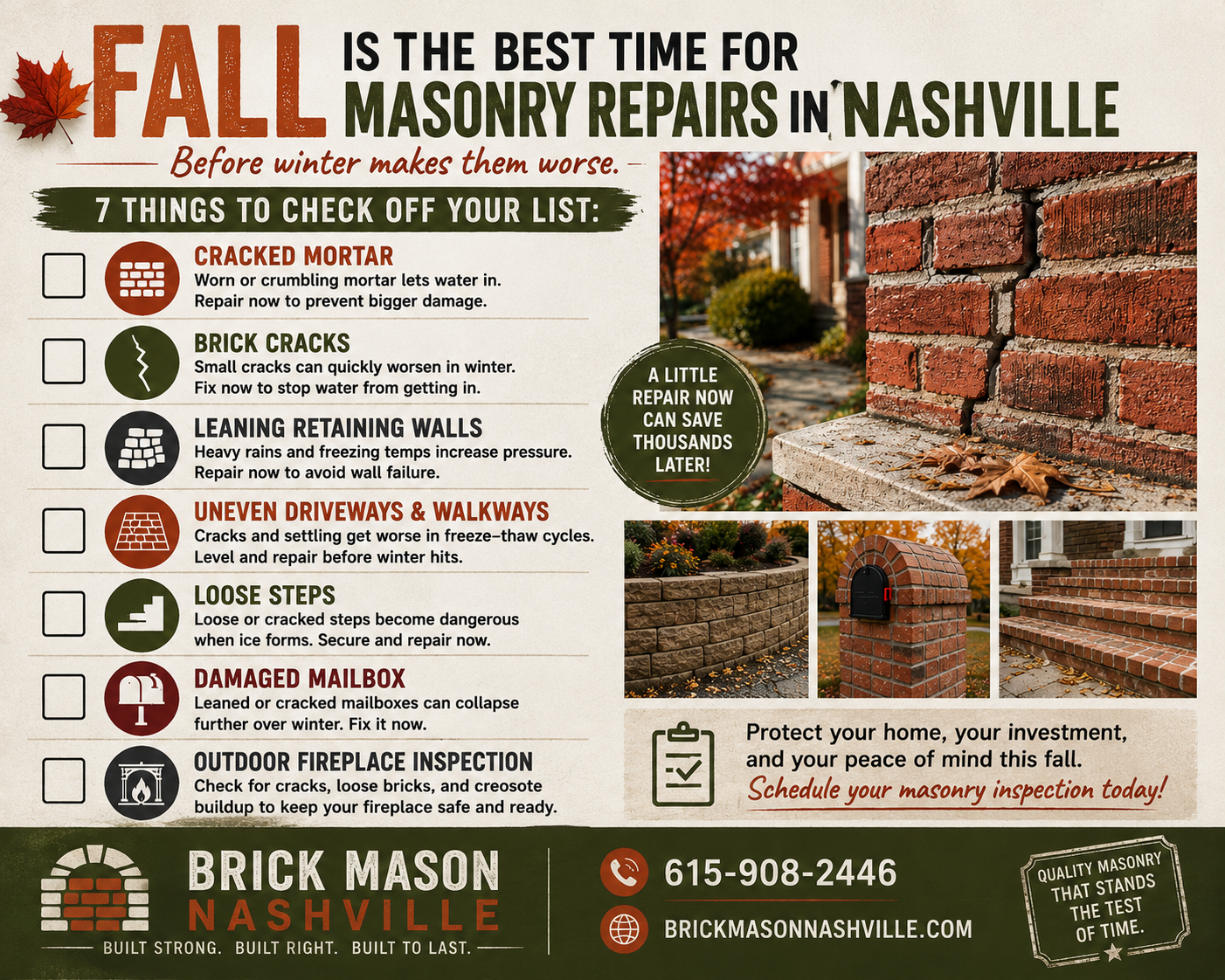
Why Fall Is the Best Time for Masonry Repairs in Nashville (Before Winter Makes Them Worse)
Should You Repair Masonry Before Winter?
Yes. Fall is one of the best times of year to repair brick, stone, concrete, and mortar in Nashville. Cooler temperatures create better conditions for masonry work, and repairing small problems before winter helps prevent moisture, freezing temperatures, and repeated freeze-thaw cycles from turning inexpensive repairs into major structural projects. These moderate temperatures also allow mortar to cure more consistently than the heat of summer or the cold of winter.
If you've noticed cracked mortar, loose bricks, a leaning retaining wall, uneven steps, or a sinking driveway, scheduling repairs this fall can help protect your property and avoid more expensive damage next spring.
Why Nashville's Fall Weather Is Ideal for Masonry Repairs
Many homeowners assume spring is the best time for outdoor projects. While spring is busy, fall is often a better season for masonry work.
Middle Tennessee typically experiences:
- Comfortable daytime temperatures
- Lower humidity than summer
- More consistent weather
- Enough time for repairs before freezing temperatures arrive
These conditions help mortar cure properly while allowing contractors to complete projects before winter weather creates additional damage. Mortar cures best under moderate conditions rather than extreme heat or freezing temperatures.
Why Winter Makes Small Masonry Problems Much Worse
One of the biggest threats to masonry isn't snow itself—it's water. Here's what happens:
- Rain enters tiny cracks in brick or mortar.
- Overnight temperatures drop below freezing.
- Water freezes and expands.
- The expansion widens the crack.
- The next rain allows even more moisture inside.
This cycle repeats throughout the winter. Over time, what started as a small cosmetic crack can become:
- Loose bricks
- Crumbling mortar
- Spalling brick faces
- Leaning walls
- Costly structural repairs
This repeated freeze-thaw cycle is one of the primary causes of masonry deterioration in climates like Middle Tennessee.
Masonry Repairs You Should Complete Before Winter
1. Tuckpointing & Mortar Repairs
Mortar naturally wears over time. Signs you shouldn't ignore include:
- Missing mortar
- Powdery joints
- Cracks between bricks
- Small gaps around windows or chimneys
Repairing deteriorated mortar now helps keep water out before freezing weather arrives.
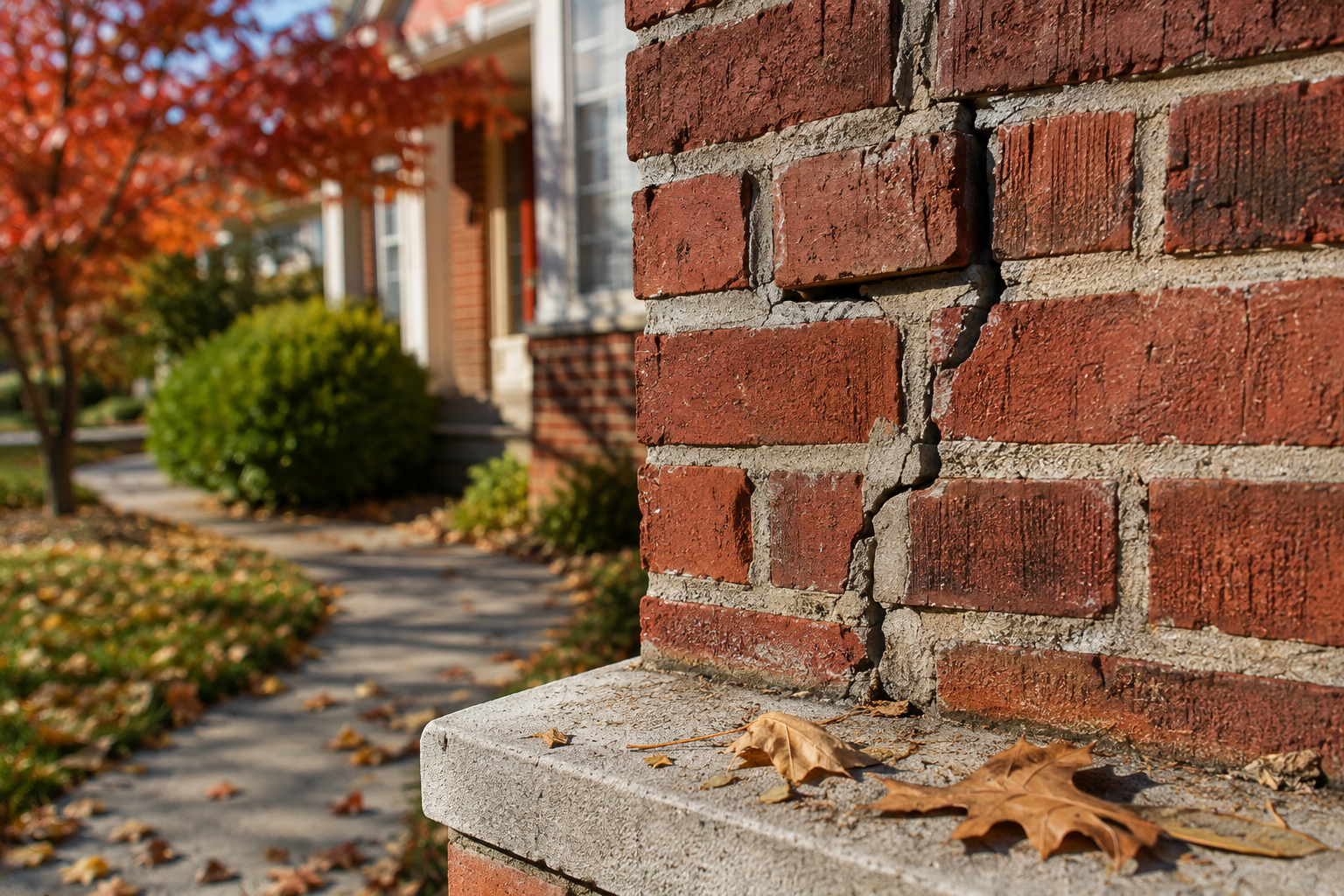
2. Brick Crack Repairs
Many homeowners notice cracks but assume they can wait until spring. Unfortunately, winter often makes those cracks much larger. Early repairs help prevent:
- Water intrusion
- Brick movement
- Larger structural repairs
If you're unsure whether a crack is cosmetic or structural, a masonry inspection can provide peace of mind.
3. Retaining Wall Repairs
Retaining walls work hard all year—but fall is an especially important time to inspect them.
Heavy autumn rains increase soil moisture behind retaining walls.
If drainage isn't functioning properly, winter freezing can increase pressure even further. Watch for:
- Leaning walls
- Bulging sections
- New cracks
- Water draining through joints
These issues rarely improve on their own.
4. Driveway & Walkway Repairs
Concrete, brick, and stone driveways all experience movement over time. Before winter arrives, inspect for:
- Uneven surfaces
- Cracks
- Sunken areas
- Loose pavers
Repairing these issues now can help prevent:
- Larger cracks
- Trip hazards
- Water infiltration
- Costly replacement later
5. Brick Steps & Entryways
Front steps are one of the most heavily used masonry features around a home. Loose bricks or cracked mortar become even more dangerous when:
- Rain freezes overnight
- Ice forms
- Guests visit during the holidays
Fall is an excellent time to restore safety before winter weather arrives.
6. Brick Mailboxes
Brick mailboxes are one of the first things people notice from the street. If yours has:
- Leaned
- Been struck by a vehicle
- Developed cracks
- Started separating
Fall is an ideal time to repair or rebuild it before freezing temperatures and winter moisture make the damage worse.
Don't Forget Outdoor Living Features
Many Nashville homeowners stop thinking about patios after summer. Ironically, fall is one of the best times to improve outdoor living spaces. Projects such as:
- Outdoor fireplaces
- Fire pits
- Seating walls
- Patios
- Outdoor kitchens
can often be completed during cooler weather while preparing your backyard for next spring.
Why Waiting Until Spring Can Cost More
Many homeowners postpone masonry repairs because the damage "doesn't look that bad." Unfortunately, winter rarely leaves masonry unchanged. Small repairs can become:
- Larger tuckpointing projects
- Partial wall rebuilds
- Retaining wall replacement
- Extensive driveway repairs
Addressing problems while they're still minor often saves both time and money.
Should You Schedule a Masonry Inspection This Fall?
If you notice any of these warning signs, the answer is yes.
Schedule an inspection if you see:
- Cracked mortar
- Loose bricks
- Leaning walls
- Uneven driveways
- Settling walkways
- Water stains on masonry
- Bulging retaining walls
- Cracks around windows or doors
An inspection can determine whether the damage is cosmetic—or whether it should be repaired before winter.
Why Nashville Homeowners Choose Brick Mason Nashville
At Brick Mason Nashville, we understand the unique challenges that Middle Tennessee weather creates for brick, stone, and concrete structures. Our team specializes in:
- Brick repair
- Tuckpointing
- Retaining walls
- Brick mailboxes
- Driveway and walkway repairs
- Steps and entryways
- Outdoor living features
- Commercial masonry
We focus on identifying the cause of masonry problems—not simply covering them up—so your repairs are built to last.
Frequently Asked Questions
Is fall really better than spring for masonry repairs?
In many cases, yes. Moderate temperatures and lower humidity provide excellent curing conditions for mortar, and completing repairs before winter helps prevent freeze-thaw damage.
Can brick repairs be completed before winter?
Absolutely. Fall is one of the best times to repair cracked brick, replace damaged mortar, and address drainage issues before freezing temperatures arrive.
What happens if I wait until spring?
Water can continue entering damaged masonry throughout the winter. Freeze-thaw cycles often enlarge cracks and accelerate deterioration, resulting in more extensive repairs.
Should I repair my retaining wall before winter?
Yes. Retaining walls experience increased pressure from wet soil during fall and winter. Repairing drainage and structural issues before freezing weather arrives can help prevent larger failures.
Is fall a good time to build a patio or outdoor fireplace?
Yes. Cooler temperatures often make fall one of the most comfortable times of year for masonry construction, and you'll be ready to enjoy your outdoor space the following spring.
Protect Your Masonry Before Winter Arrives
The best time to repair masonry damage is before winter has a chance to make it worse.
Whether you've noticed cracked mortar, a leaning retaining wall, uneven steps, a sinking driveway, or loose brick, addressing the issue this fall can help protect your home, preserve its value, and reduce the likelihood of more expensive repairs next year.
Brick Mason Nashville provides professional masonry inspections, repairs, and custom masonry construction throughout Nashville and the surrounding communities. Our experienced team can evaluate your brick, stone, and concrete features, explain your repair options, and recommend solutions designed to stand up to Middle Tennessee's changing weather.
Call today or request a free estimate online to schedule your fall masonry inspection before winter arrives.