
Driveway Settling & Sinking in Nashville: Causes, Risks, and Long-Lasting Repair Options
Why Do Driveways Sink or Settle in Nashville?
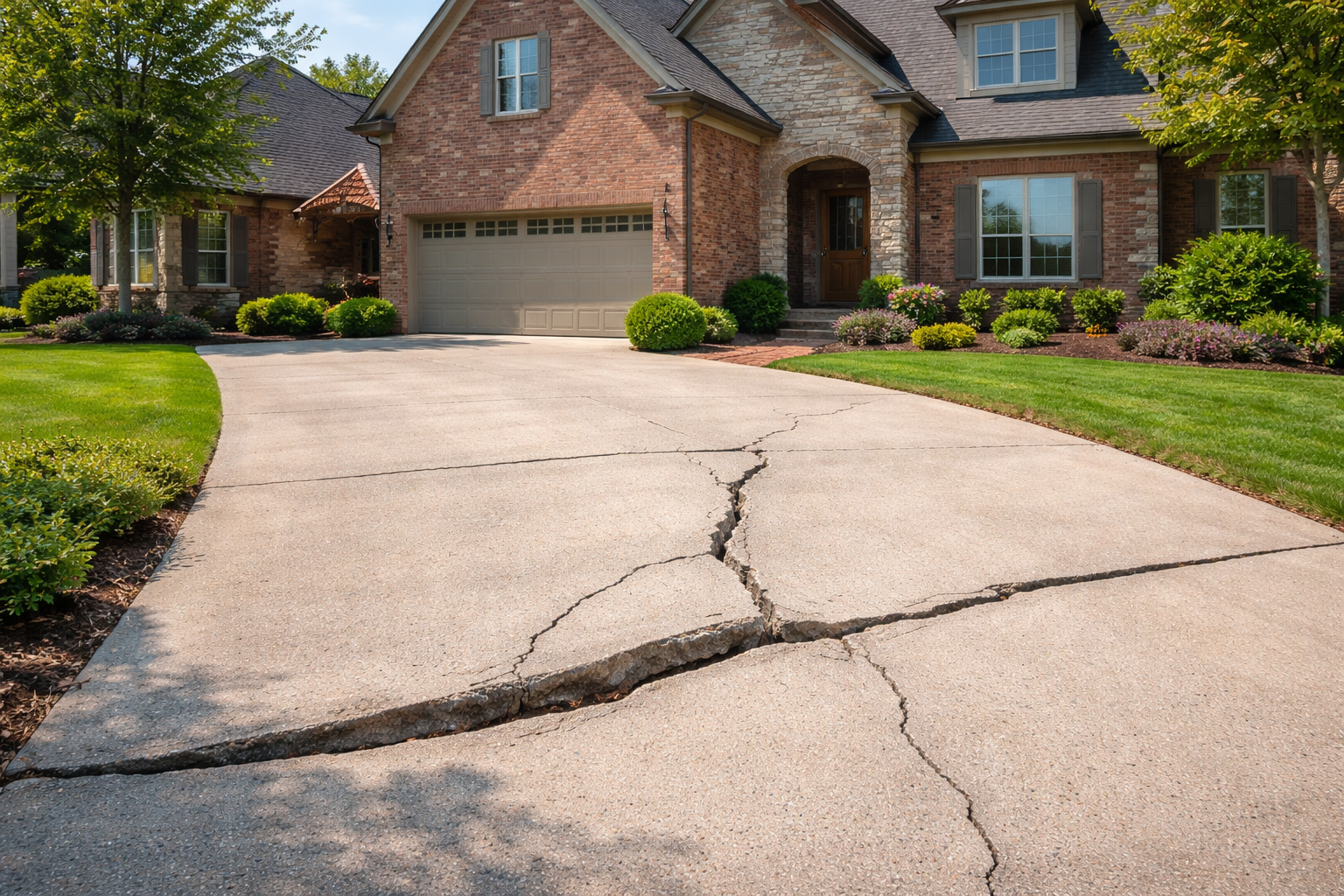
If your driveway is cracking, dipping, separating, or sloping toward your home, the most common cause in Middle Tennessee is soil movement beneath the driveway—not surface wear.
In Nashville and surrounding areas, driveway settling affects:
- Concrete driveways
- Brick or paver driveways
- Stone or mixed-material driveways
The issue isn’t the driveway material itself — it’s what’s happening under it.
Nashville-Specific Factors That Cause Driveway Settling
Middle Tennessee has a perfect storm of conditions that make driveway movement common:
Expansive clay soil
- Clay soil expands when wet and shrinks when dry
- This constant movement destabilizes driveway bases
Heavy rainfall and poor drainage
- Water washes away compacted base material
- Soil erosion leads to voids beneath the driveway
Freeze-thaw cycles
- Water enters small gaps
- Freezing expands the soil and materials
- Thawing leaves behind uneven surfaces
Improper base installation
- Many older Nashville homes were built with minimal base prep
- Driveways look fine for years — until they don’t
Vehicle load stress
- Repeated parking in the same areas accelerates settling
- Especially near garages and street connections
Common Signs Your Driveway Is Settling or Sinking
Homeowners often ask, “Is this normal cracking, or is something wrong?” Here’s how to tell the difference.
Warning Signs to Watch For
- Uneven or sunken sections
- Cracks widening over time
- Separation between driveway and garage slab
- Pooling water after rain
- Trip hazards or tire scraping
- Pavers or stones pulling apart
- Sloping toward the foundation
If the issue keeps getting worse year after year, settling is almost always the cause.
Does This Affect Concrete, Brick, and Stone Driveways Differently?
Yes — and knowing the difference helps determine the right repair.
Concrete Driveways
- Crack when the slab loses support
- May sink as one piece or break into sections
- Cosmetic patching rarely lasts if the base is failing
Brick & Paver Driveways
- Individual units shift, dip, or spread apart
- Often caused by base washout or edge failure
- Can usually be repaired without full replacement if addressed early
Stone Driveways
- Heavier materials put more pressure on weak soil
- Settlement often shows as uneven joints or leaning edges
- Requires strong base correction to prevent repeat issues
What Happens If You Ignore a Settling Driveway?
Delaying repairs doesn’t just affect appearance — it can create bigger problems.
Long-Term Risks
- Accelerated cracking and material failure
- Drainage issues leading toward the home
- Garage foundation stress
- Vehicle damage
- Higher repair costs later
- Safety hazards for guests and delivery drivers
What starts as a small dip can turn into a full driveway rebuild if left unchecked.
Driveway Repair Options That Actually Last in Nashville
Not all driveway repairs are equal. The key is fixing the cause, not just the surface.
Base Correction & Re-Leveling
Best for brick, paver, and stone driveways
- Remove affected sections
- Rebuild and compact the base properly
- Reset materials for a level, stable surface
Partial Slab Repair (Concrete)
Works when damage is isolated
- Remove and replace failing sections
- Correct drainage and base issues underneath
Full Driveway Replacement
Recommended when:
- Settlement is widespread
- Base failure is extensive
- Multiple repairs have already failed
Drainage Improvements
Often combined with repairs
- French drains
- Regrading
- Water diversion away from driveway edges
Which Repair Option Is Best for Your Driveway?
It depends on three things:
- Extent of settling
- Driveway material
- Underlying soil and drainage conditions
That’s why a proper masonry inspection matters. A surface fix without soil evaluation often fails within a few seasons.
Why Masonry-Based Repairs Outperform Temporary Fixes
Quick fixes like crack fillers or overlays may look good short term — but they don’t stop movement.
Professional masonry repair focuses on:
- Long-term base stability
- Proper compaction
- Material compatibility
- Drainage control
That’s how repairs last through Nashville’s weather cycles.
Frequently Asked Questions About Driveway Settling in Nashville
Why is my driveway sinking near the garage?
This area bears the most weight and often has poor drainage. Soil washout is a common cause.
Can a sinking driveway be repaired without replacing it?
Yes — especially brick, paver, and stone driveways. Early intervention can prevent full replacement.
How long do driveway repairs last?
When base issues are corrected, repairs can last decades.
Is driveway settling covered by insurance?
Usually not, unless caused by a sudden event like a fallen tree or storm-related damage.
When is the best time of year for driveway repairs in Nashville?
Spring through fall is ideal, but urgent settling issues can be addressed year-round.
Why Nashville Homeowners Trust Brick Mason Nashville for Driveway Repairs
- Experience with Middle Tennessee soil conditions
- Repairs for concrete, brick, and stone driveways
- Focus on long-term solutions, not quick patches
- Honest assessments and clear recommendations
- Residential and commercial driveway expertise
Schedule a Driveway Inspection Before the Damage Gets Worse
If your driveway is sinking, cracking, or pulling away, the sooner it’s evaluated, the more repair options you’ll have.
Brick Mason Nashville provides professional driveway inspections and long-lasting repair solutions designed for Nashville’s soil and climate.
Call today or request a free estimate to find out what’s causing your driveway issues — and how to fix them the right way.